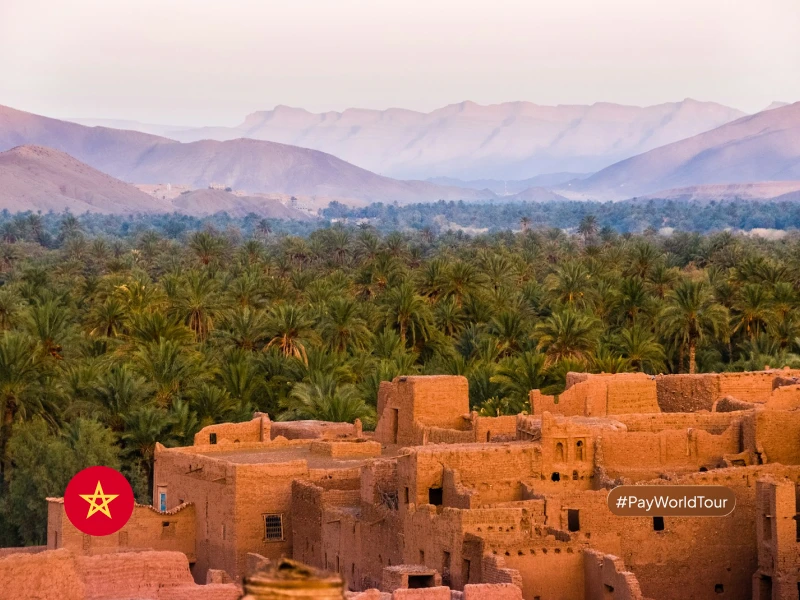

How people pay in Morocco in 2026
Morocco is a cash country that is going digital fast, but not fast enough to dent cash. Currency in circulation reached 513 billion dirhams at the end of 2025, up 15.5% and about 30% of GDP, according to Bank Al-Maghrib. At the same time, card payments grew 20% to 230.1 million operations in 2025, and Moroccan cardholders still used their cards for 450 million cash withdrawals, two thirds of all card operations. Online, the habit is the same: 84.1% of online shoppers pay cash on delivery, according to the ANRT ICT survey.
The rails are changing quickly. The Centre Monétique Interbancaire (CMI) handed its merchant acquiring business to seven bank-owned payment institutions on February 1, 2026, the interchange cap fell to 0.5% on October 1, 2026, and Bank Al-Maghrib's 2025 payment systems report shows instant transfers and mobile payment growing by 78% and 42%. For PSPs, Morocco means cards through the new multi-acquirer market, strong cash-in networks such as Cash Plus and Wafacash, and cash on delivery that nobody can yet ignore.
- 513 billion MAD currency in circulation at the end of 2025 (Bank Al-Maghrib via Hespress)
- 230.1 million card payments in 2025, up 20% (Bank Al-Maghrib via Finances News)
- 16.2 million mobile payment accounts at the end of 2025 (Bank Al-Maghrib via Hespress)
- 84.1% of online shoppers use cash on delivery, 2024 data (ANRT via North Africa Post)
Payment by card in Morocco
Moroccan banks issue a mix of domestic-only cards and Visa or Mastercard cards. Bank Al-Maghrib counted 22.6 million bank cards in circulation in 2024, up 12% in a year. In 2025, cards made 230.1 million payments worth 70.8 billion dirhams, including 184.5 million at payment terminals and 44.8 million e-commerce payments worth 12.1 billion dirhams. Yet payments are still only 34% of card operations by number and 13% by value. The rest are ATM withdrawals.
Acceptance is being rebuilt. The CMI, owned by the main banks, ran almost all merchant acquiring until early 2026. Under commitments made to the Competition Council, it transferred about 55,000 merchant contracts to seven payment institutions such as Attijari Payment, M2T and Damane Cash, and now acts as a multi-acquirer technical platform. Bank Al-Maghrib also cut the domestic interchange fee cap from 0.65% to 0.5% from October 1, 2026, with 0.15% for neighborhood shops and e-government. Contactless already covered over 70% of CMI transactions, according to the CMI.
Card schemes in Morocco
Domestic debit cards
Domestic debit card
Most Moroccans hold a basic bank debit card, often valid only in Morocco, used mainly for ATM withdrawals and increasingly for contactless payments in shops and online.
22.6 million bank cards in circulation in 2024, Bank Al-Maghrib via Hespress
Visa

International scheme
Visa brands many Moroccan debit, credit and premium cards issued for international use, and Visa cards from foreign tourists and the diaspora are accepted at every terminal.
Mastercard

International scheme
The other global scheme on Moroccan cards, used by banks such as CIH Bank and by Attijariwafa bank's new neobank Simple, which issues a free Mastercard with its entry plan.
CMI

Card processing platform
The Centre Monétique Interbancaire switches and processes card payments for Moroccan banks and merchants. Since February 2026 it no longer signs merchants itself and serves as a multi-acquirer platform for payment institutions.
240 million+ card transactions in 2025 (forecast), including about 32 billion MAD paid with foreign cards, CMI
Card e-commerce payments
Online card payment
Online card payments run through local gateways connected to the acquirers, such as the CMI gateway or Payzone, launched by Vantage Payment Systems in 2025.
44.8 million card e-commerce payments in 2025, up 16%, Bank Al-Maghrib via Finances News
Payment by cash in Morocco
Cash is still the default way to pay in Morocco, and it keeps growing. Currency in circulation rose 15.5% to 513 billion dirhams in 2025, around 30% of GDP, while card withdrawals reached 450 million operations worth 460 billion dirhams. Economists quoted by Le360 link the trend to the informal economy, low trust in banks and hoarding: the 200-dirham note makes up 75% of the value of banknotes in circulation. Bank Al-Maghrib's own report describes electronic payments and cash rising at the same time.
For online sellers, cash on delivery is the norm, used by 84.1% of online shoppers in 2024. Cash also feeds digital payments through dense networks of payment institutions, such as Cash Plus, Wafacash, Damane Cash and Barid Cash, where people pay bills, receive transfers from the diaspora and top up wallets. Our article on the transition from cash to digital payments looks at how other markets made this shift.
Cash payment methods in Morocco
Cash
Banknotes and coins
Dirham banknotes and coins remain the main way to pay in small shops, souks, taxis and between people, and demand for cash keeps rising.
513 billion MAD currency in circulation at the end of 2025, up 15.5%, Bank Al-Maghrib via Hespress
Cash on delivery
Cash on delivery
Shoppers pay the courier in cash when the parcel arrives. Carriers and payment institutions now speed up seller payouts, as in the Damane Cash and Express Relais partnership.
84.1% of online shoppers use cash on delivery, 2024 data, ANRT via North Africa Post
Cash Plus

Cash-in network
Listed in Casablanca since December 2025, Cash Plus handles transfers, bill payments, a payment account and cash payment of e-commerce purchases in its agencies. It also serves Orange Money customers for deposits and withdrawals.
5,200 agencies at the end of 2025, Boursenews
Wafacash

Cash-in network
The Attijariwafa bank group's payment institution, used for transfers and bill payments. Its Jibi mobile payment account lets users pay merchants and cash in or out at agencies.
About 3,000 Wafacash and Attijariwafa bank agencies for Jibi cash-in and cash-out, Wafacash
Damane Cash
Cash-in network
Bank of Africa's payment institution, active in transfers, bill payment, cash-in for Orange Money and, since 2026, merchant acquiring.
4,000 service points across Morocco in 2025, Hespress
Barid Cash

Cash-in network
The payment institution of Al Barid Bank, the postal bank, strong in rural areas for transfers, bill payments and cash withdrawals.
3,500 Al Barid Bank and Barid Cash agencies combined in 2024, Al Barid Bank
Payment by bank transfer in Morocco
Bank transfers are mostly a B2B and payroll tool in Morocco, but instant payments are starting to change that. The interbank instant transfer, run by the clearing group GSIMT, went live on June 1, 2023. In 2025 instant transfer operations grew by about 78%, reaching 29 million interbank transfers with an average amount of 3,700 dirhams, under a 20,000-dirham cap. Their share of non-cash operations rose from 2.6% to 4%.
Bill payment is the other big account-to-account flow. The CMI's Fatourati platform processed more than 250 million transactions worth about 220 billion dirhams in 2025, according to CMI forecasts, mostly for public bodies, paid by card, at agencies or from banking apps. In e-commerce, transfers are rare. Shoppers favor cards or cash on delivery, and Bank Al-Maghrib's 2024-2028 strategy relies on wallets and instant payments to reduce cash use for everyday purchases. Our guide to account-to-account payments explains the merchant case for these rails.
Bank transfer methods in Morocco
Instant transfer (virement instantané)
Instant payment
Interbank transfers settled in seconds, launched by GSIMT and Bank Al-Maghrib in 2023, available in banking apps and capped at 20,000 dirhams per transfer.
29 million interbank instant transfers in 2025, up about 78%, Bank Al-Maghrib via Hespress
Standard bank transfer

Credit transfer
Classic transfers through the national clearing system, used for salaries, supplier payments and large purchases, and still offered by some merchants as a manual payment option.
Fatourati
Bill payment hub
The CMI's bill and tax payment platform, connecting public bodies and utilities to more than 70 collection channels, including cards, banking apps and agency networks.
250 million+ transactions worth about 220 billion MAD in 2025 (forecast), CMI
Payment by installment and BNPL in Morocco
Buy now, pay later is new in Morocco. Deferred payment long existed informally, with shopkeepers keeping a tab, but the first regulated player only arrived in 2024. Alya received Bank Al-Maghrib approval in March 2024 to split purchases into two, three or four interest-free installments. Awareness is ahead of use: in the Mastercard New Payments Index quoted by Finances News, 74% of Moroccan consumers know the concept, 39% are comfortable with it and 10% have already used it.
Installment credit itself is large. Consumer credit outstanding reached 162 billion dirhams at the end of 2024, up 7.9%, with finance companies such as Wafasalaf and Salafin growing faster than banks. According to the same report, the CMI, Naps and Barid Bank are adding split payment options to their terminals and gateways, which should bring installment payments to more checkouts.
Installment and BNPL providers in Morocco
Alya Pay
BNPL
Morocco's first regulated BNPL provider, founded in 2023, splits purchases into two to four interest-free installments charged to the bank card, online and in stores such as fashion, home and fitness brands.
10,000+ users claimed by Alya in 2026, Alya
Wafasalaf
Consumer credit
A major Moroccan consumer finance company offering personal loans repaid in monthly installments and, according to Finances News, the Mazeed revolving credit card.
Salafin
Installment card
Consumer finance company whose N Pay card runs on Visa and lets holders repay purchases, online or abroad, in 3, 6 or 10 monthly installments from a reserve of up to 60,000 dirhams.
Split payment at terminals
Card installments
Acquirers and processors, including the CMI, Naps and Barid Bank, are rolling out split payment options on payment terminals and online gateways.
162 billion MAD consumer credit outstanding at the end of 2024, Le360
Payment by digital wallet and X-Pay in Morocco
Mobile payment is Bank Al-Maghrib's main weapon against cash. Banks, telecom operators and payment institutions issue interoperable mobile wallets linked to a phone number. In 2025, payment accounts reached 16.2 million, up from 13.8 million, and mobile wallet transactions rose from 19.7 million to 28 million. That is still small next to cash, and in 2024 the market counted 21 active solutions, 12 of them run by payment institutions.
Telecom wallets such as Orange Money, inwi money and MT Cash rely on cash-in agents, while bank apps add QR payments, like Simple Pay in Attijariwafa bank's neobank Simple, launched in May 2026. X-Pay wallets are recent: Apple Pay went live in 2023 with CIH Bank and Crédit Agricole du Maroc, and Attijariwafa bank added Google Pay in March 2024. Their use grows with contactless acceptance and the new multi-acquirer market.
Digital wallets and X-Pay in Morocco
Orange Money

Mobile money wallet
Orange Maroc's wallet, launched in 2020, for transfers, bill payments and merchant payments, with cash-in and cash-out at Cash Plus agencies since June 2026 and at Damane Cash.
inwi money

Mobile money wallet
The wallet of telecom operator inwi, launched in 2019, for instant transfers, bill payments and QR code payments at merchants, with an agent network for cash-in and cash-out.
MT Cash
Mobile money wallet
Maroc Telecom's mobile money subsidiary, which signed a partnership with Visa in April 2025 to add Visa payment solutions to its wallets.
Barid Pay
Mobile wallet
Barid Cash's payment account app, launched in 2020, for transfers, bill payments, cardless withdrawals and payments at merchants that accept national mobile payment.
Apple Pay

Mobile wallet
Available in Morocco since 2023, first with CIH Bank and Crédit Agricole du Maroc, and supported by a growing number of banks for contactless and online payments.
Google Pay

Mobile wallet
The Android wallet, offered by banks such as Attijariwafa bank since March 2024 for tokenized contactless payments.
16.2 million mobile payment accounts at the end of 2025 (all providers), Bank Al-Maghrib via Hespress
Payments in Morocco: FAQ
What is the most popular payment method in Morocco?
Cash. Currency in circulation reached 513 billion dirhams at the end of 2025, around 30% of GDP, and two thirds of card operations are still ATM withdrawals. Online, 84.1% of shoppers pay cash on delivery.
How do Moroccans pay online?
Mostly cash on delivery, then cards. Moroccan cards made 44.8 million e-commerce payments worth 12.1 billion dirhams in 2025, up 16%. Mobile wallets and instant transfers are growing but remain small online.
Who acquires card payments in Morocco in 2026?
Since February 1, 2026, merchants are served by payment institutions such as Attijari Payment, M2T, Damane Cash, Lana Cash, Al Filahi Cash, Saham Paiements and CDM Pay, plus Naps, Barid Cash and VPS. The CMI transferred about 55,000 merchant contracts and became a multi-acquirer platform.
Is BNPL available in Morocco?
Yes, but it is young. Alya was approved by Bank Al-Maghrib in March 2024 to offer interest-free payment in up to four installments, and acquirers are adding split payment to terminals. Only 10% of consumers have tried BNPL, according to the Mastercard New Payments Index.
Accept local payments in Morocco with NORBr
Morocco moved to a multi-acquirer model in February 2026, ending CMI's role as single acquirer, while NAPS and Payzone add gateways, wallets and cash collection. Check Bank Al-Maghrib approval, MAD settlement and national card coverage.
With NORBr, you can connect any acquirer, PSP or local provider that offers CMI-acquired cards, cash on delivery, cash networks such as Cash Plus and Wafacash, and instant transfers. Some are already in our connector catalog; Mapper™ gets the others live in days, and Smart Checkout shows each shopper the right methods. Explore the other #PayWorldTour guides.
Local payment providers in Morocco
CMI

Card processor
Morocco's interbank card center, the country's sole merchant acquirer until February 2026 and now a multi-acquirer processing platform for payment institutions.
Covers: Cards, Visa, Mastercard
M2T
Aggregator
Casablanca-based transaction processor behind the Fatourati bill-payment platform, collecting bill and online payments through banks and agent networks, and among the buyers of part of CMI's activity.
Covers: Fatourati, Cards, Cash
NAPS

PSP
Moroccan payment institution offering merchant acceptance, prepaid cards and mobile payments to retailers, billers and businesses.
Covers: Cards, Mobile payment, Prepaid cards
Payzone

Payment gateway
Moroccan payment institution offering an online payment gateway for e-merchants alongside a network of local agents for cash payments and bill payments.
Covers: Cards, Cash