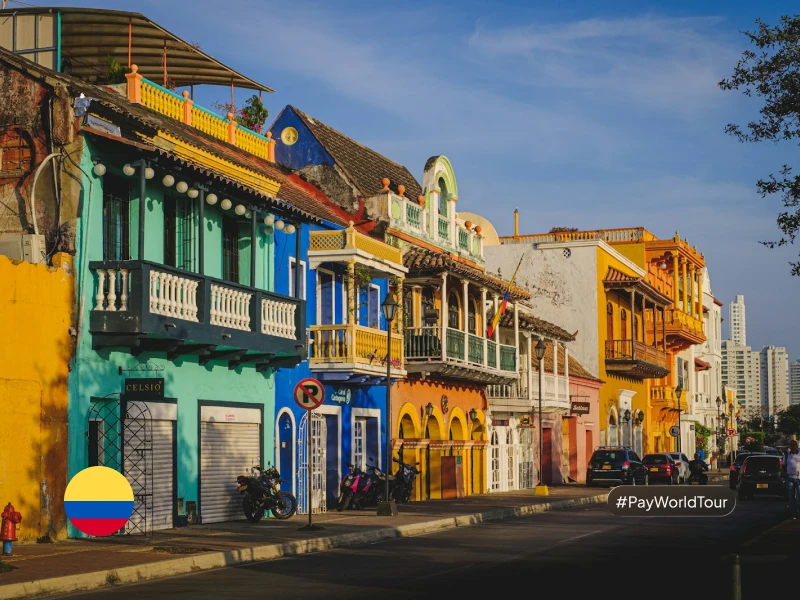
How people pay in Argentina in 2026
Argentina has moved fast from cash to accounts. Almost every adult now holds an account, and 28.9 million adults had a payment account in June 2025, according to the central bank (BCRA). Instant transfers are the main rail. Using an account number (CBU for banks, CVU for wallets) or a simple alias, people sent 779 million transfers in pesos in August 2026, up 20.3% year on year. Payments with interoperable QR codes reached 117.2 million in the same month, up 67.5%.
Cards still lead online. Credit cards made 67% of digital sales in 2025 in the CACE e-commerce study, and 81% of shoppers say installments (cuotas) weigh on their choice. Inflation shapes everything: prices rose 33.4% in the 12 months to September 2026, according to INDEC data, which keeps interest-free cuotas popular. Since April 2025, individuals can buy dollars without limits, but card spending abroad still carries a 30% tax perception. Wallets, led by Mercado Pago, and the cash collection networks Rapipago and Pago Fácil complete the picture.
- 779 million instant transfers in pesos in August 2026 (BCRA)
- 117.2 million interoperable QR payments in August 2026 (BCRA)
- ARS 35.3 trillion e-commerce sales in 2025, up 60% (CACE via Mercado)
- 33.4% annual inflation in September 2026 (INDEC via Canal 26)
Payment by card in Argentina
Argentina has a crowded card market. Visa and Mastercard dominate, next to the cooperative scheme Cabal, Naranja X's own card and American Express. The BCRA counted 25.9 million credit card holders in June 2025. In July 2026, Argentines made 159.3 million credit card payments worth ARS 10 trillion and 172 million debit card payments. Both fell in real terms year on year, as transfers and QR payments took share.
Credit cards remain the online default. According to the BCRA, 41.7% of credit card payments were made in e-commerce, 33.5% at POS and QR, and 15.9% by automatic debit. Installments matter: payments in one cuota made 88.6% of transactions but only 67.7% of value, so the large tickets go in cuotas. Card acceptance is expensive for merchants. Mercado Pago, for example, lists 5.99% plus VAT for an instantly settled credit card QR payment, against 0.8% for account-to-account payments. Knowing how interchange fees and acquirer pricing work pays off in this market.
Card schemes in Argentina
Visa

International scheme
The most widespread card brand in Argentina, on bank and fintech credit, debit and prepaid cards, and tokenized in Google Pay and Apple Pay.
159.3 million credit card payments, all schemes, in July 2026, BCRA
Mastercard

International scheme
The second global scheme, used by major banks and by fintechs such as Ualá, whose prepaid card runs on Mastercard.
Cabal

Domestic scheme
An Argentine card brand founded in 1980 and run as a cooperative since 1992, issued by Banco Credicoop and several provincial banks, and also present in Uruguay, Paraguay and Brazil, according to Rankia.
Naranja X card

Private label card
Born in Córdoba in 1985, the Naranja card is now part of the Naranja X fintech of Grupo Galicia, with its own branded card and a network of 150,000 adhered merchants.
16 million+ enabled cards in 2026, Mercado
American Express

International scheme
A premium card used by higher-income customers and travelers, and one of the cards that work with Apple Pay in Argentina.
Debit cards
Debit card
Every bank account comes with a debit card, used in stores, online and for cash withdrawals at ATMs and store tills.
172 million debit card payments in July 2026, down 8.4% year on year, BCRA
Payment by cash in Argentina
Cash is losing ground quickly. The BCRA measured cash in circulation at 6.2% of GDP in the first half of 2025, a historic low, while electronic payments reached 28.4 per adult per month. Banknotes in circulation fell about 43% from their July 2024 peak by December 2025. ATM use is falling too: 41 million withdrawals in July 2026 across 16,662 ATMs, down 28% year on year.
Cash still matters for people without bank cards and for paying bills. Two large networks of agents, Rapipago and Pago Fácil, collect utility bills, taxes and online orders paid with a barcode voucher, and let wallet users load or withdraw cash. Rapipago counts more than 10,000 points and about 7 million monthly users. Merchants selling online can offer these vouchers as a cash option. Our case studies on the transition from cash to digital payments show the same path in other markets.
Cash payment methods in Argentina
Cash
Banknotes and coins
Peso banknotes remain common for small purchases, informal trade and older consumers, but their share keeps shrinking.
6.2% cash in circulation as a share of GDP in H1 2025, BCRA
Rapipago

Cash voucher network
Gire's network of agents in kiosks, supermarkets and shops, used to pay bills and online orders in cash with a barcode, and to load wallets.
10,000+ points of service and about 7 million monthly users in 2026, Mercado
Pago Fácil
Cash voucher network
Western Union's Argentine collection network since 2006, with a digital wallet that lets users deposit and withdraw cash at its branches.
6,500+ payment locations in August 2025, Western Union
Cash withdrawal at stores
Cash back
Shops can hand out cash against a debit card or a wallet balance, a service that fills gaps in the ATM network.
3.1 million debit card withdrawals outside banks in July 2026, BCRA
Payment by bank transfer in Argentina
Account-to-account payments are the backbone of Argentine payments. Immediate payments, transfers and payments with transfer, made 60% of electronic payment operations and 73% of their value in the first half of 2025. Transfers settle in seconds using a CBU, a CVU or an alias. In August 2026, 76.9% of peso transfers had a CVU as origin or destination, a sign of how much wallets drive this rail.
The BCRA's Transferencias 3.0 framework, live since late 2021, standardized QR codes so that any bank app or wallet can pay any merchant QR, with immediate and irrevocable settlement. Payments with transfer grew 65.6% year on year to 118.3 million in August 2026, and 99.1% of them started with a QR code. Pull payments complete the picture: DEBIN for requests to pay and direct debit for recurring bills. Our guides to instant payment and account-to-account payments explain why these rails matter for merchants. Our real-time payments explorer compares instant payment systems country by country.
Bank transfer methods in Argentina
Transferencias inmediatas
Instant payment
Real-time transfers between bank accounts (CBU) and wallet payment accounts (CVU), addressed with an account number or an easy alias, used for P2P, bills and online orders.
779 million peso transfers worth ARS 96 trillion in August 2026, BCRA
Interoperable QR (Transferencias 3.0)
QR payment
BCRA standard that lets any of the registered wallets and banking apps pay any merchant QR from the account balance, with instant settlement for the merchant.
117.2 million QR payments in August 2026, up 67.5% year on year, BCRA
DEBIN
Request to pay
The immediate debit (débito inmediato), a pull payment in which the merchant sends a request that the payer approves in the banking app, used for wallet top-ups and online payments.
44.5 million pull transfers into accounts in August 2026, BCRA
Direct debit
Direct debit
Recurring debits from a bank account for utilities, insurance and subscriptions.
11.1 million direct debits in August 2026, with a 40.4% success rate, BCRA
ECHEQ
Electronic check
The electronic check, widely used between companies for deferred B2B payments and now the dominant form of check in Argentina.
3.1 million ECHEQs cleared in August 2026, 87.2% of check value, BCRA
Payment by installment and BNPL in Argentina
In Argentina, installment payments on credit cards, the famous cuotas, are the local form of buy now, pay later. In the CACE 2025 study, 81% of online shoppers said installments matter to their decision, and 54% of financed sales were paid in 3 to 6 installments. Merchants and banks fund interest-free plans as a sales tool, a habit built over years of high inflation.
Government programs used to anchor this market. Ahora 12, then its successor Cuota Simple, offered state-backed plans in 3 to 12 installments. Cuota Simple stopped working in June 2025, and Resolución 12/2026 repealed its rules in June 2026. Banks, wallets and processors now run their own plans. Without a credit card, shoppers can use wallet credit lines such as Mercado Pago cuotas sin tarjeta, or debit card installments from Gocuotas. Credit risk is the limit: Ualá reported non-performing loans at 32% of its portfolio in November 2025.
Installment and BNPL providers in Argentina
Credit card cuotas
Card installments
Credit card payments split into 3, 6, 12 or more monthly installments, often interest-free when the merchant or bank funds the plan.
32.3% of credit card transaction value paid in more than one installment in July 2026, BCRA
Mercado Pago cuotas sin tarjeta

Wallet BNPL
Mercado Crédito's credit line lets Mercado Pago users pay in fixed monthly installments without a credit card, on Mercado Libre, in other online stores and at QR merchants.
1.35% plus VAT merchant fee for QR payments in cuotas sin tarjeta, Mercado Pago
Gocuotas
Debit BNPL
A BNPL fintech that splits debit card purchases into interest-free installments, with the first paid at checkout, and is available as an app on Tiendanube stores.
3 million users and 90,000+ stores in April 2025, Descubre
Wallet and bank promotions in cuotas
Card installments
Bank wallets add interest-free plans on linked credit cards, such as up to three interest-free installments with Cuenta DNI at adhered non-food merchants.
Payment by digital wallet and X-Pay in Argentina
Wallets are central to Argentine payments. The BCRA lists 92 interoperable digital wallets and 233 payment service providers, which held 67.3 million payment accounts in July 2026. Mercado Pago leads by far, followed by fintechs such as Ualá and Naranja X, the banks' joint app MODO and the public bank wallet Cuenta DNI. In e-commerce, transfers from wallets reached 20% of digital sales in 2025, up from 8% in 2024, according to CACE.
Global X-Pay wallets play a smaller role. Apple Pay launched in Argentina in 2022, but in 2026 it still has more limited support, with banks such as Galicia, BBVA, Santander, Macro and Comafi. Google Pay works with more banks and with fintech cards issued through Pomelo. Most in-store wallet payments are QR rather than NFC.
Digital wallets and X-Pay in Argentina
Mercado Pago
QR wallet
Mercado Libre's wallet and acquirer, used for QR payments, transfers, bill payments, credit and its own credit card, with about one million cards issued a year after launch. It also runs a large network of merchant QR codes and POS devices.
52% growth in Argentina acquiring TPV in Q2 2026, MercadoLibre
MODO
Bank wallet
The banks' joint payment solution, available as an app and inside banking apps, for QR payments, transfers, transit fares and bank promotions.
30+ connected banks in 2026, MODO
Cuenta DNI

Bank wallet
Banco Provincia's wallet, popular in Buenos Aires province for QR payments with weekly discounts at local shops, markets and restaurants.
Ualá

Neobank wallet
Fintech with a prepaid and debit Mastercard, a banking license through Ualá Bank, transfers, QR payments and investments in one app.
20%+ of Argentina's population with a Ualá account in March 2026, Bloomberg Línea
Naranja X
Fintech wallet
Grupo Galicia's fintech, with a wallet, a payment account, QR payments, loans and the Naranja card.
9 million+ clients in 2026, Mercado
Google Pay and Apple Pay

Mobile wallet
Tap-to-pay wallets for tokenized cards. Google Pay supports more banks and fintechs than Apple Pay, and Visa promotes it on its Argentine site.
Payments in Argentina: FAQ
What is the most popular way to pay in Argentina?
Instant transfers between bank and wallet accounts. Argentines made 779 million peso transfers in August 2026, against 159 million credit card payments a month. Online, credit cards still lead with 67% of digital sales in 2025.
Is Cuota Simple still active in 2026?
No. The government program stopped in June 2025 and its rules were repealed in June 2026. Interest-free cuotas still exist, but banks, wallets and merchants now fund them.
Can Argentines pay foreign merchants with their cards?
Yes. Currency controls for individuals were lifted in April 2025, but card purchases abroad paid in pesos carry a 30% tax perception under RG 5617. Cardholders can avoid it by paying their card bill in dollars.
Does Argentina have a national QR standard?
Yes. The BCRA's Transferencias 3.0 makes every merchant QR readable by any wallet or banking app. Interoperable QR payments reached 117.2 million in August 2026, up 67.5% in a year.
Accept local payments in Argentina with NORBr
In Argentina, cards run mainly through Payway, part of Visa since Visa acquired Prisma and Newpay, plus Fiserv and Getnet. A PSP, PayFac, ISO or ISV should check Cabal and Naranja X cards, cuotas and interoperable QR.
With NORBr, you can connect any acquirer, PSP or local provider that offers cards paid in cuotas, instant transfers and interoperable QR, Mercado Pago, MODO and cash networks such as Rapipago. Some are already in our connector catalog; Mapper™ gets the others live in days, and Smart Checkout shows each shopper the right methods. Explore the other #PayWorldTour guides.
Local payment providers in Argentina
Payway

Acquirer
Argentina's largest card acquiring and gateway brand, operated by Prisma Medios de Pago, which Visa acquired in 2026; it serves merchants online and in store.
Covers: Visa, Mastercard, Cabal, American Express, Naranja X, QR payments
Fiserv Argentina

Acquirer
Local arm of US processor Fiserv, formerly First Data Argentina, providing card acquiring, POS terminals and online payments to Argentine merchants.
Covers: Visa, Mastercard, Cabal, American Express, QR payments
Getnet Argentina

Acquirer
Santander's merchant acquiring business in Argentina, offering terminals, payment links and online checkout to businesses of all sizes.
Covers: Visa, Mastercard, Cabal, American Express, QR payments
Mercado Pago

Aggregator
Founded in Argentina as the payments arm of Mercado Libre, it serves online and in-store merchants with a checkout, QR codes and Point terminals.
Covers: Cards, Mercado Pago, Rapipago, Pago Fácil, Transferencias 3.0
Ualá Bis
Aggregator
The merchant acceptance service of Argentine fintech Ualá, giving small businesses and freelancers card terminals, QR codes and payment links.
Covers: Visa, Mastercard, Ualá, QR payments