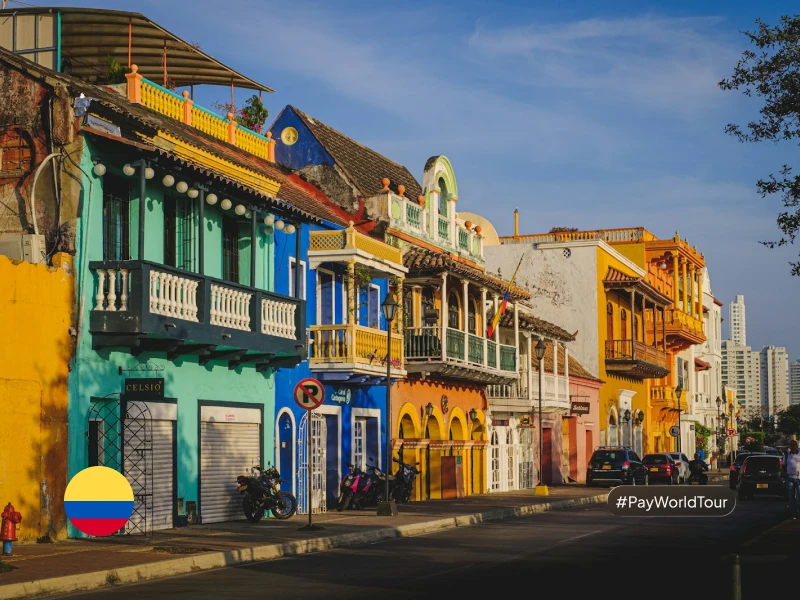

How people pay in France in 2026
France is a card country built around its own scheme, Cartes Bancaires (CB). The Banque de France's payment security observatory counted 35.6 billion non-cash transactions worth EUR 36,264 billion in 2025, up 5.5% in number, and cards made 62.7% of them. In stores, 72% of card payments were contactless and more than 19% were made with a phone in 2025, according to a summary of the report. Cash is still around, but in 2024 card payments overtook cash at the point of sale for the first time.
Under the surface, the rails are shifting. Instant transfers grew 78% in 2025 and now make up about one transfer in six, while cheques, long a French habit, fell 14% and are below 2% of transactions. Wero, the European bank wallet that replaced Paylib for transfers between friends, started taking online payments at some French banks in 2026, ahead of a wider launch. Online shoppers mix CB cards, PayPal and split payments in three or four installments. A French checkout needs CB routing, Apple Pay and Google Pay, PayPal, and a pay in 3 or 4 option.
- 35.6 billion non-cash transactions in France in 2025 (Banque de France, OSMP)
- 62.7% of non-cash transactions made by card in 2025 (Banque de France, OSMP)
- 1 in 6 transfers sent as an instant transfer in 2025 (Banque de France, OSMP)
- 43% of point-of-sale transactions paid in cash in 2024 (Banque de France)
Payment by card in France
Most French bank cards are co-badged: they carry the domestic CB scheme alongside Visa or Mastercard, and the CB network processes most domestic payments. The network itself claimed 77 million CB cards in circulation and 14.5 billion transactions in 2024. Its share of transactions slid for four years as some banks issued Visa-only cards, then rose again to 63.6% of card payments in the second half of 2025, according to the private Yavin terminal index reported by MoneyVox, helped by CB in Apple Pay and the return of co-badged cards at BPCE. Merchants can choose which network routes a co-badged payment, which makes routing a real cost lever. Our guide to how card networks work explains the mechanics.
Card payments keep growing. They made 62.7% of non-cash transactions in 2025, and the Banque de France reported a historic drop in the card fraud rate. Costs follow the EU interchange fee caps. France also has a card type of its own: meal vouchers (titres-restaurant), now mostly issued as payment cards that run on a separate network, Conecs, at restaurants and food stores.
Card schemes in France
CB (Cartes Bancaires)

Domestic card scheme
The French interbank scheme, created in 1984 and co-badged with Visa or Mastercard on most French cards. It works in stores, online and in Apple Pay, and is being added to Samsung Pay and Google Pay bank by bank in 2026.
77 million CB cards in circulation in 2024, as claimed by the network, Europe 1
Visa

International scheme
Visa sits on most co-badged French cards next to CB and handles cross-border and some domestic payments. Some banks and neobanks issue Visa-only debit cards.
Mastercard

International scheme
The other international brand found on co-badged CB cards, also issued alone by several banks and neobanks for debit and credit.
Debit cards (immediate and deferred)
Bank debit card
French debit cards are either immediate debit or deferred debit, where purchases are taken from the account once a month. True revolving credit cards are rare.
62.7% card share of non-cash transactions in France in 2025, Banque de France, OSMP
Conecs meal voucher cards
Meal voucher card
Titres-restaurant cards from Edenred, Pluxee, Up and Swile run on the Conecs network and are accepted at restaurants and food stores, and online through gateways such as Lyra.
Payment by cash in France
Cash is losing ground but not disappearing. The ECB's SPACE survey, analyzed by the Banque de France, found that cash made 43% of point-of-sale transactions in 2024, down 25 points since 2016, and that cards overtook cash in stores for the first time. The same study notes that the vast majority of French people still value having cash as an option.
Withdrawals confirm the trend. According to the Banque de France's observatory, cash withdrawals fell 5% in number in 2025, with an average withdrawal of EUR 126. For online sales, cash plays almost no role. Merchants with a cash-heavy clientele, such as markets, small shops and older customers, still need it at the counter. For background, see how other countries handled the transition from cash to digital payments.
Cash payment methods in France
Cash
Banknotes and coins
Euro banknotes and coins remain accepted in almost every store and are still common for small amounts, even as cards overtake them.
43% of point-of-sale transactions paid in cash in 2024, Banque de France
ATM cash withdrawal
Cash withdrawal
Most cash is taken from bank ATMs with a CB card. The number of withdrawals keeps falling each year.
EUR 126 average cash withdrawal in 2025, Banque de France, OSMP
Payment by bank transfer in France
Transfers carry 89% of the value of non-cash payments in France, and instant transfers are where the growth is. In 2025, instant transfers rose 78% in number and 118% in value, and one transfer in six was sent as an instant transfer. Direct debit (prélèvement SEPA) remains the standard for bills and subscriptions. Cheques are fading: they fell 14% in 2025 and now make up 1.9% of transactions, yet keep the highest fraud rate of all instruments. See our article on Europe's instant payments moment and how instant payment works.
Wero, from the European Payments Initiative, took over the Paylib person-to-person network in 2024. By June 2026, nearly 40 million of its 55 million users were in France, according to EPI figures reported by MoneyVox. BPCE banks started rolling out Wero online payments in May 2026, and EPI targets a general French e-commerce launch in the second half of 2026, with in-store payments pushed back to 2027. Open banking providers also offer pay by bank at checkout.
Bank transfer methods in France
Instant transfer (virement instantané)
Instant payment
SEPA Instant transfers that arrive in seconds, available in French banking apps and increasingly used to pay merchants through pay-by-bank providers.
1 in 6 transfers sent was instant in 2025, Banque de France, OSMP
Wero

Bank wallet
EPI's account-to-account wallet built into French banking apps. It replaced Paylib for transfers between friends and is opening to online merchants in 2026, starting with BPCE banks; in-store payments are planned for 2027.
Nearly 40 million Wero users in France, 72% of its 55 million users, reported June 2026, EPI figures via MoneyVox
SEPA direct debit (prélèvement)

Direct debit
The customer signs a mandate with an IBAN and the merchant collects the amount. It is the norm for utilities, telecoms, insurance and subscriptions.
Pay by bank (open banking)

Pay by bank
Licensed providers start a transfer from the shopper's bank account at checkout, often as an instant transfer, used for high-value and B2B payments.
Cheque
Paper cheque
Still accepted by some merchants, landlords and public bodies, but in steady decline and the instrument with the highest fraud rate.
Below 2% of non-cash transactions in 2025, down 14% in number, Banque de France, OSMP
Payment by installment and BNPL in France
Paying in 3 or 4 installments (paiement en 3 ou 4 fois) is a French checkout standard, usually charged to the shopper's card. The market is led by local players. Alma, founded in Paris, handled EUR 2.5 billion in business volume in 2025, up 30%, and reached profitability, with 23,000 merchants in Europe. Oney, linked to the BPCE group, and Floa, owned by BNP Paribas, are the other domestic leaders, and Floa describes itself as a French leader in split payments. Klarna and PayPal compete for online shoppers.
Most offers are interest-free for the customer and paid for by the merchant. The EU's revised consumer credit directive, which France transposed in 2025 and which applies from November 20, 2026, brings short-term buy now, pay later credit under consumer credit rules, with creditworthiness checks and more disclosure, so expect changes in checkout flows and approval rates.
Installment and BNPL providers in France
Alma

BNPL
Paris-based provider of pay in 2, 3 or 4 installments, pay later and longer financing, used by online and in-store merchants.
EUR 2.5 billion business volume in 2025, up 30%, Finyear
Oney

Installment payments
French consumer finance company offering pay in 3 or 4 installments at many large retailers and online shops.
Floa

Installment payments
BNP Paribas subsidiary specialized in split payments, offered by large French e-merchants and also active in Spain, Belgium, Italy and Portugal, according to BNP Paribas.
Klarna

BNPL
The Swedish provider offers pay in 3 installments and pay later at French online shops through its app and payment providers.
PayPal 4X

Wallet BNPL
PayPal's interest-free payment in 4 installments, offered inside PayPal checkout to eligible French users.
Payment by digital wallet and X-Pay in France
Phones are now a common way to pay in French stores. Mobile wallets carried more than 19% of in-store card payments in 2025, up from 15%, and the Banque de France counted 38% more card payments by mobile. The CB scheme is now inside Apple Pay, which helped it regain share, and Samsung Pay and Google Pay are adding CB bank by bank in 2026. These X-Pay wallets tokenize the shopper's card, so most of their volume still runs on card rails.
Online, PayPal is the main wallet. The Banque de France found that PayPal alone accounted for almost 18% of online payments in 2024, within a 27% share for online wallets. For transfers between friends, Wero and Lydia dominate; Lydia moved its banking offer to a new brand, Sumeria, in 2024, while the Lydia app stays focused on peer-to-peer payments.
Digital wallets and X-Pay in France
PayPal
Online wallet
The leading online wallet in France, used across e-commerce for buyer protection and quick checkout, with pay in 4 installments.
Almost 18% of online payments in France in 2024, Banque de France
Apple Pay

Mobile wallet
Apple's wallet for contactless and online payments, which now supports the CB scheme, so co-badged cards can run on the domestic network.
Google Pay

Mobile wallet
The Android wallet for tap-to-pay and online checkout. CB support started with Pluxee meal voucher cards in 2025, and banks are expected to follow in 2026.
Samsung Pay

Mobile wallet
Samsung's wallet for contactless payments on Galaxy phones, now offered by most large French banks; some, such as BNP Paribas since July 2026, run it on CB.
19%+ of in-store card payments made with a mobile wallet in 2025, Banque de France data via La finance pour tous
Payments in France: FAQ
What is the most common payment method in France?
The bank card. Cards made 62.7% of non-cash transactions in 2025, and most French cards are co-badged with the domestic CB scheme and Visa or Mastercard. In stores, 72% of card payments are contactless.
What replaced Paylib in France?
Wero. The European Payments Initiative's wallet took over the Paylib network in 2024 and counted nearly 40 million French users in June 2026. In 2026 it started handling online payments, beginning with BPCE banks, and in-store payments are planned for 2027.
Is buy now, pay later popular in France?
Yes, mostly as pay in 3 or 4 installments on a card. Alma, Oney and Floa lead locally, and Alma alone handled EUR 2.5 billion in 2025. New EU consumer credit rules apply to these products from November 20, 2026.
Do French people still use cheques and cash?
Less and less. Cheques fell 14% in 2025 and are below 2% of non-cash transactions. Cash still made 43% of point-of-sale transactions in 2024, but cards have overtaken it in stores.
Accept local payments in France with NORBr
In France, merchants usually get card acceptance from bank groups such as BNP Paribas with Axepta or BPCE Merchant Services, or from Worldline. A PSP, PayFac, ISO or ISV should check CB routing, meal voucher cards and a Wero plan.
With NORBr, you can connect any acquirer, PSP or local provider that offers CB cards, Wero, instant transfers, PayPal and 3x 4x payment options such as Alma and Oney. Some are already in our connector catalog; Mapper™ gets the others live in days, and Smart Checkout shows each shopper the right methods. Explore the other #PayWorldTour guides.
Local payment providers in France
Payplug
Payment gateway
French gateway owned by BPCE since 2017, which absorbed Dalenys in 2023 and now powers BPCE Merchant Services for online, in-store and omnichannel merchants. It added CB in Apple Pay and is preparing Wero for French e-commerce.
Covers: Cards (CB, Visa, Mastercard), Apple Pay, Installment payments, Wero
HiPay
PSP
French payment institution listed in Paris, serving online and in-store merchants in France and Portugal, including retail and regulated gaming.
EUR 9.55 billion in payment volume in 2025, up 4%, HiPay
Covers: Cards (CB, Visa, Mastercard), Apple Pay, PayPal, Installment payments
Axepta BNP Paribas
Acquirer
BNP Paribas's merchant acceptance offer for online and in-store payments, combining bank acquiring of CB cards with a payment gateway.
Covers: Cards (CB, Visa, Mastercard), Apple Pay, Google Pay, PayPal
Lyra
Payment gateway
Toulouse-based gateway behind several bank-branded gateways in France, which handles Conecs meal voucher cards next to cards online.
Covers: Cards (CB, Visa, Mastercard), Conecs meal voucher cards, Apple Pay, PayPal
Fintecture

Pay-by-bank provider
Paris-based payment institution offering pay by bank and instant transfer payments for e-commerce, retail and B2B merchants, as an alternative to cards for high amounts.
Covers: Pay by bank, Instant transfer, SEPA credit transfer
Worldline

Acquirer
French payment processor and acquirer headquartered in Puteaux, serving large retailers and banks in France; its Axis in-store acceptance platform passed 10 billion transactions at Monoprix in December 2025.
EUR 4.6 billion group revenue in 2024, Worldline
Covers: Cards (CB, Visa, Mastercard), Apple Pay, Google Pay, Wero